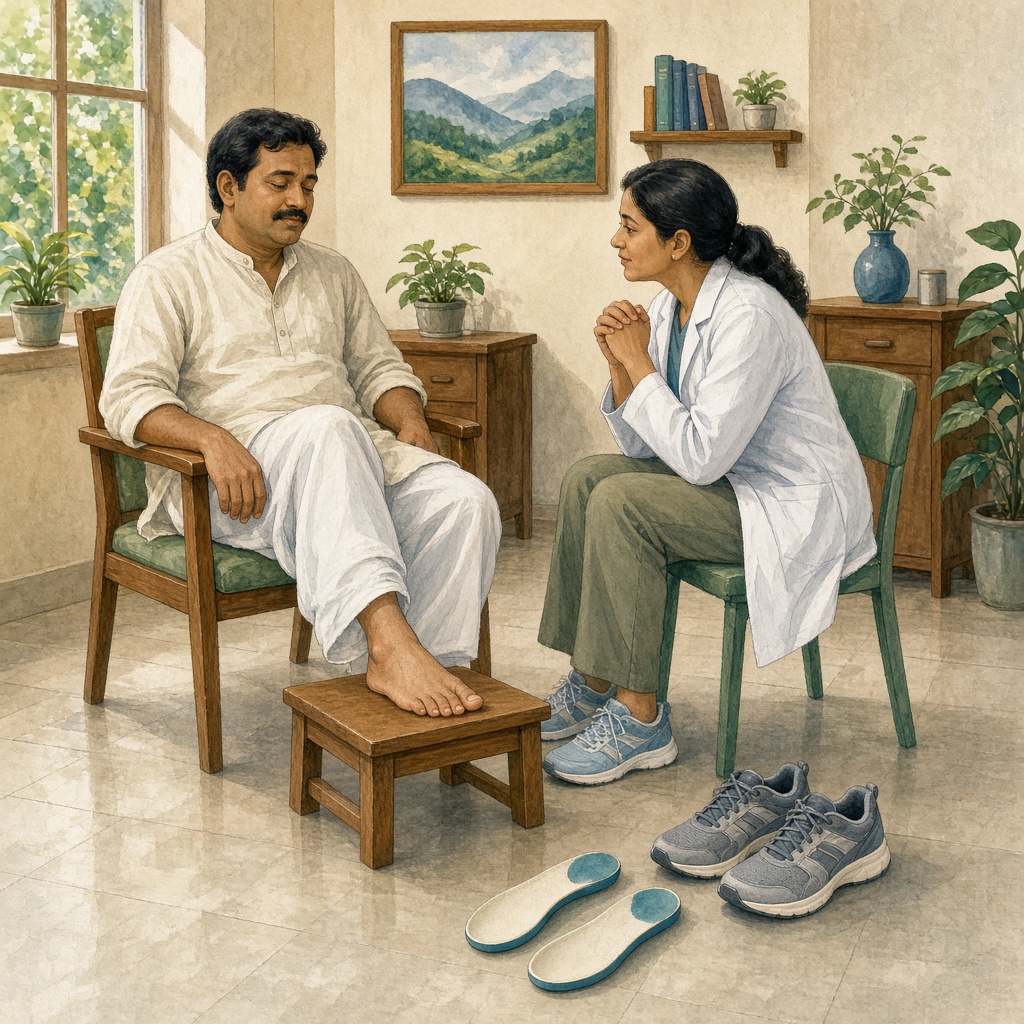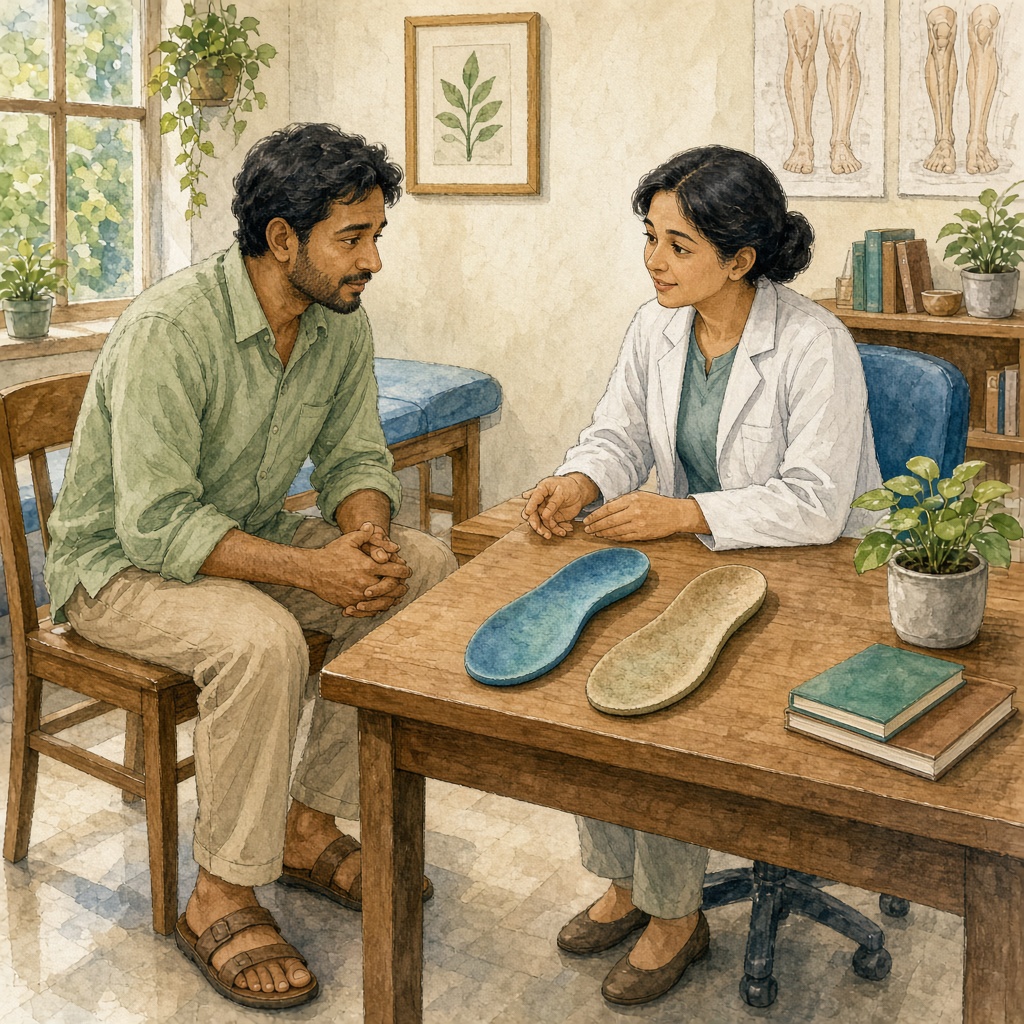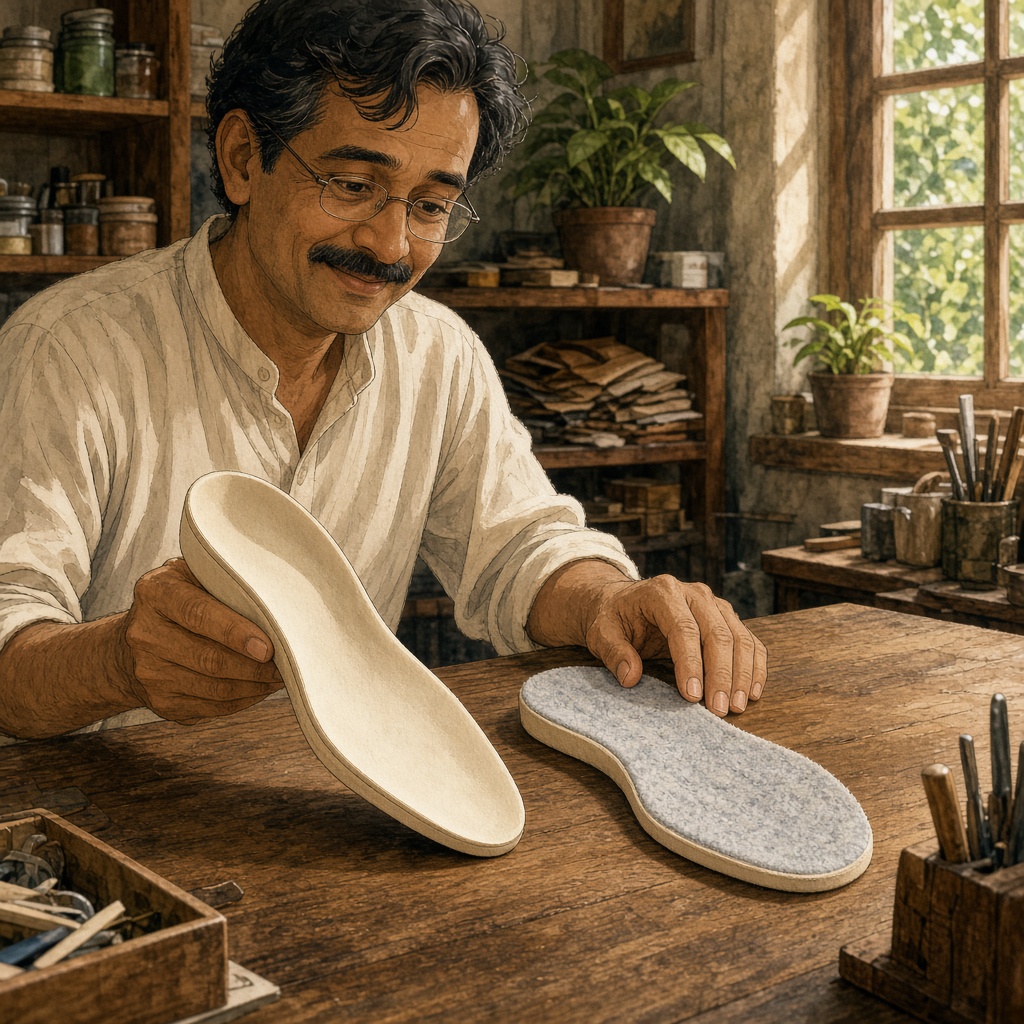
Foot pain is easy to ignore until it starts to change the way you stand and walk. Your feet are the base of your posture chain. With every step, load travels from the foot up through the ankle, knee, hip and lower back. When a foot rolls in too much, carries weight on only a few spots, or one side works harder than the other, the joints above may have to adjust.
This guide explains how foot alignment can relate to posture and pain, when it is worth getting checked, and where a Footscan and custom insoles in Delhi fit in. It is general information, not a diagnosis. If your pain is persistent, please see a specialist.
How your feet affect posture and alignment
Your foot has three jobs on every step. It absorbs shock as the heel lands, adapts to the ground as you roll forward, then becomes a firm lever so you can push off.
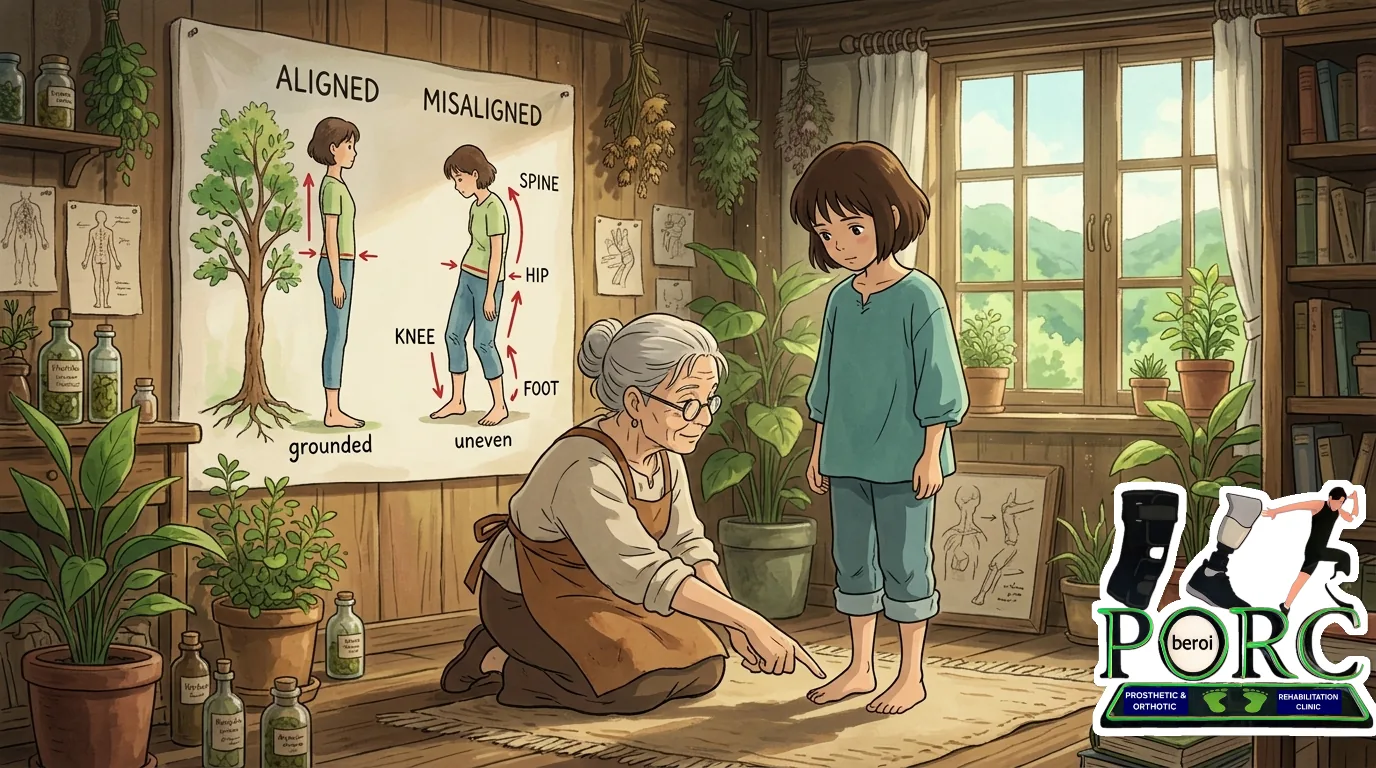
If the foot does not manage this comfortably, the body tends to compensate higher up. A common example: when the arch flattens and the foot rolls inward, the shin tends to rotate inward with it. That can bring the knee inward and change how the hip is loaded. A small change, repeated over thousands of steps a day, can add up to strain.
This does not mean every knee or back problem starts at the feet. These areas hurt for many reasons. But the feet are worth checking, especially if pain gets worse with standing, walking or certain shoes.
Common alignment problems and the pain they can contribute to
Flat feet and overpronation
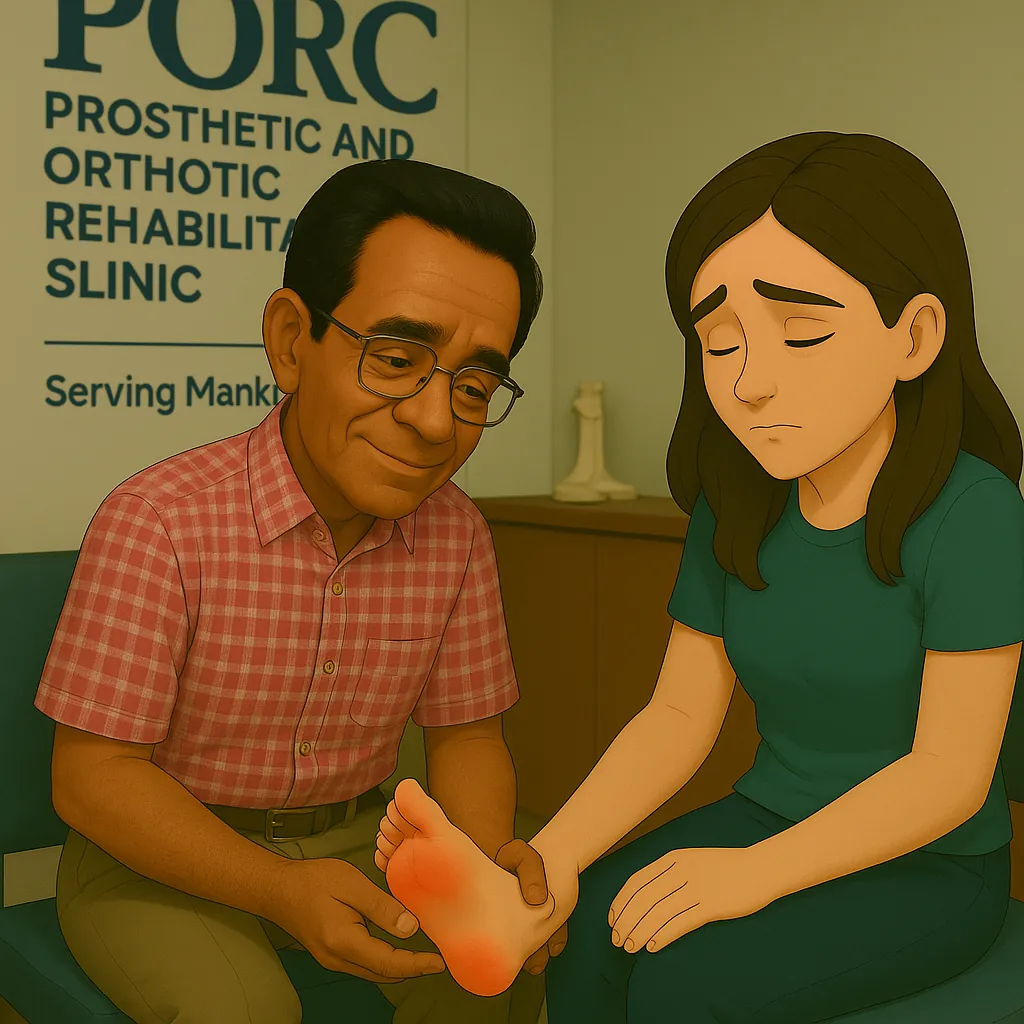
With flat feet or overpronation, the arch lowers and the foot rolls inward more than usual. This can rotate the shin inward and change knee and hip alignment. People with this pattern may notice arch or heel pain, tired legs, discomfort on the inner side of the knee, or shoes that wear down on the inner edge. Read more in our guide to flat feet and fallen arches.
High arches
A high-arched foot touches the ground mainly at the heel and the ball of the foot, with little contact in the middle. That concentrates pressure on the heel and forefoot, and the stiffer foot absorbs shock less well. Heel pain, pain under the ball of the foot, calluses and an ankle that tends to roll outward are common complaints. See high arches and supination.
Uneven pressure and left–right differences
Sometimes the two feet do not share the load equally. One foot takes more weight, or one side rolls more than the other. A difference in leg length, an old injury or a habit of standing on one leg can play a part. Uneven pressure can contribute to heel pain and plantar fasciitis, knee pain, hip discomfort and lower-back strain. Our article on the foot connection to knee, hip and back pain goes deeper.
Signs you should get your feet checked
- Heel pain, especially with the first steps in the morning
- Arch or forefoot pain after standing or walking
- Knee, hip or lower-back discomfort that feels worse when you are on your feet
- Shoes that wear out unevenly, or faster on one side
- Calluses or hard skin that keep coming back in the same spots
- One foot or leg feeling different from the other
- Ankles that roll easily, or legs that ache by evening
See a doctor promptly for sudden or severe pain, swelling, redness or warmth, numbness or tingling, or a wound that is not healing. If you have diabetes, any change in your feet needs a medical check first. Read about custom insoles for diabetic feet.
How a Footscan works
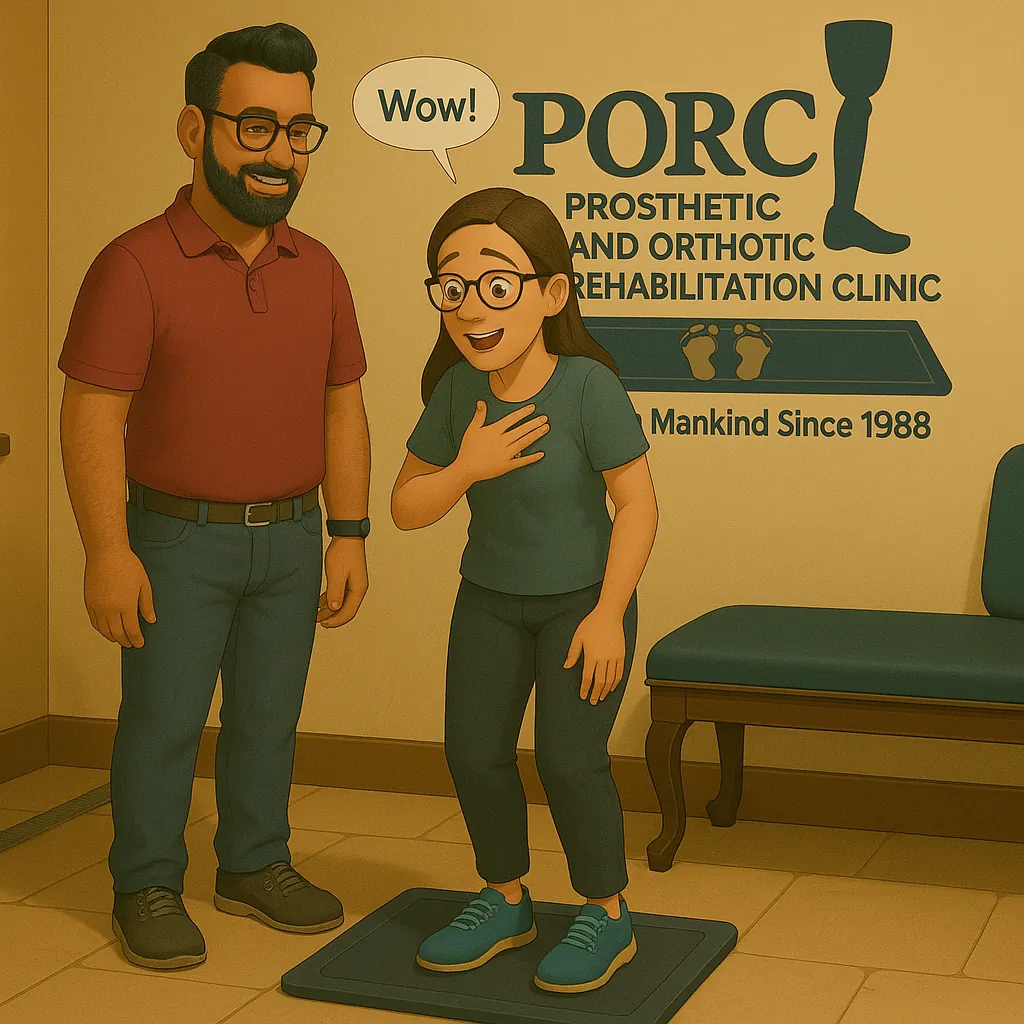
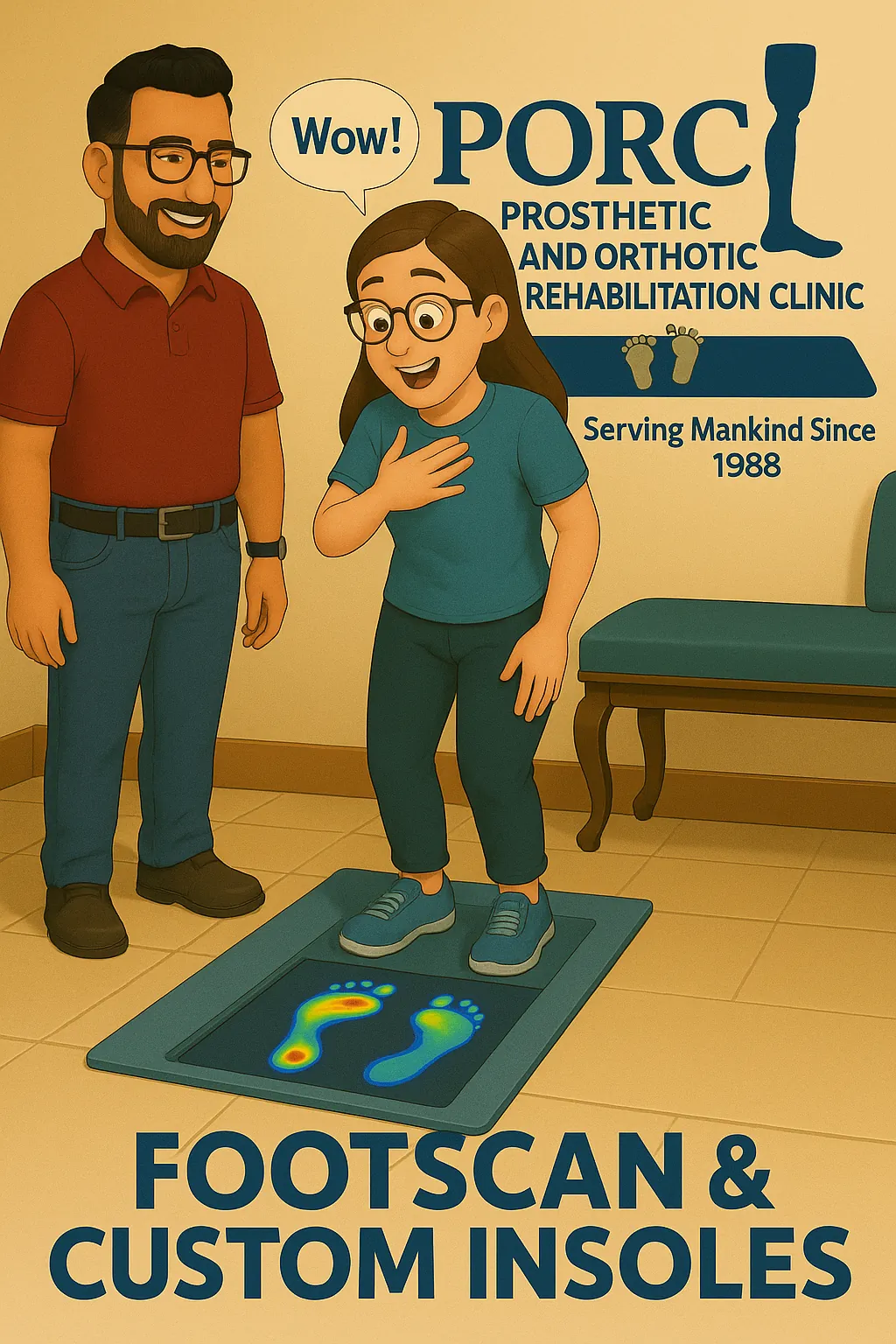
At P.O.R.C we use a Materialise Footscan pressure plate. The test is quick and painless. You stand, then walk barefoot across the plate.
- Static scan: you stand still so we can see how weight is spread between your heels, forefoot, and left and right sides.
- Dynamic scan: you walk across the plate. The system records how each foot lands, rolls and pushes off, so we can look at your gait as well as pressure.
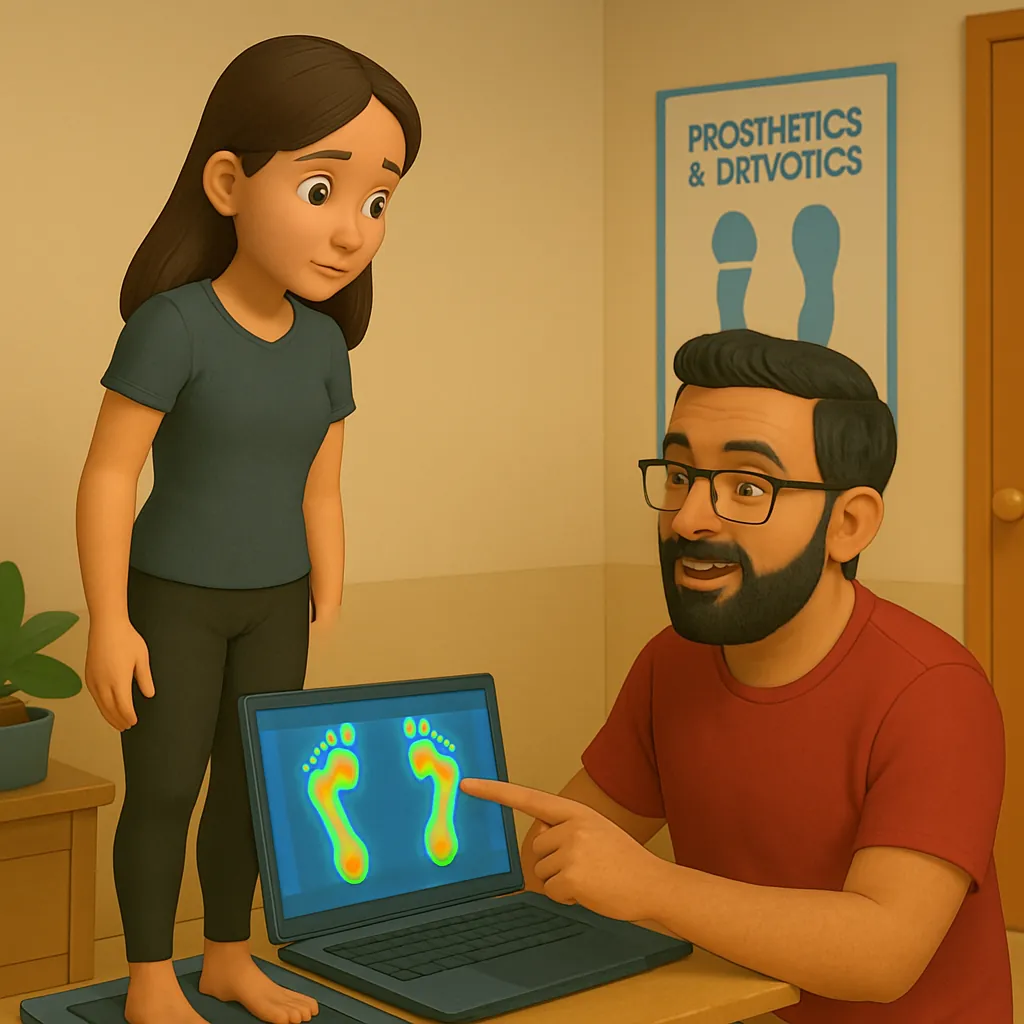
- Review together: we show you the pressure map on screen. Areas of higher pressure appear in warm colours, and we explain what they may mean.
A Footscan is a pressure and gait assessment aid, not a medical diagnosis. The clinician combines it with your history, a physical examination and any reports from your doctor.
How PHITS 3D custom insoles are made from your scan
PHITS insoles are designed from your Footscan data instead of being picked from a standard size. The version we fit now is PHITS+.
- Measure: the Footscan records your pressure and gait.
- Design: the software suggests corrections from the data. The clinician reviews and adjusts them for your foot, your shoes and your activity.
- Print: the base is 3D-printed as a thin, light nylon shell. Stiffness and support can be varied in different zones of the same insole.
- Finish and fit: an EVA or PU top cover is added for cushioning. We check the insoles in your shoes and review them after you have worn them.
Typical adjustments include heel relief and metatarsal support. Our guide to PHITS insole modifications explains which ones suit which foot issues.
Custom insoles can help spread load more evenly and may reduce strain on sensitive areas. They are one part of care, not a cure. Footwear changes, exercises or medical treatment may also be needed. Insoles sit alongside our other orthotic supports and braces.
What to expect at P.O.R.C
P.O.R.C (Prosthetic & Orthotic Rehabilitation Clinic) has served patients in Delhi NCR since 1988.
- Safdarjung Enclave, main clinic and workshop: 42 Ground Floor, Street No. 1, Krishna Nagar, Safdarjung Enclave, New Delhi 110029. Footscan and PHITS insoles are done here, Monday to Saturday, 10am to 7pm.
- Apollo Hospital, Sarita Vihar and BLK-Max Hospital, Pusa Road: P.O.R.C desks where you can start with a consultation. We can then guide you to Safdarjung Enclave for your Footscan. Please call to confirm desk timings.
Your visit covers your symptoms and history, the static and dynamic scan, a review of the pressure map with you, insole design, and fitting with a follow-up. Please bring the shoes you wear most, including work or sports shoes, and any doctor's reports.
Frequently asked questions
Is a Footscan a diagnosis?
No. A Footscan measures pressure and timing under your feet. It is an assessment aid that the clinician uses together with your history and an examination. For a diagnosis of pain in the foot, knee, hip or back, please see a doctor or specialist.
Does a foot scan hurt?
No. You stand and walk barefoot on a flat plate. Nothing presses on your feet, and it only takes a short time within your appointment.
Can insoles correct my posture?
We do not promise that. Custom insoles can help support the foot and spread load more evenly, which may reduce strain further up the body. Results vary from person to person, and posture also depends on muscles, joints, habits and footwear.
Will PHITS insoles fit my shoes?
PHITS+ insoles are thin and light, and are made to fit most shoes. Bring the shoes you plan to wear them in so we can check the fit.
Where can I get a foot scan in Delhi NCR?
Footscan and PHITS custom insoles are at our Safdarjung Enclave clinic in South Delhi. If you are seen at our Apollo Sarita Vihar or BLK-Max desks, we can guide you there.
Book a Footscan in Delhi NCR
Call 9810006111 or WhatsApp 9811706111 to book a Footscan at Safdarjung Enclave. You can also find directions and timings on our contact page.