Pain under the heel during the first few steps in the morning is a common plantar fasciitis pattern. At P.O.R.C in Delhi, we combine clinical assessment, footwear review and Materialise Footscan pressure data to decide whether a personalized PHITS 3D-printed insole may form part of the care plan.
What is plantar fasciitis?
The plantar fascia is a strong band of tissue that runs from the heel toward the front of the foot and helps support the arch. Plantar fasciitis describes irritation around this tissue, commonly near its attachment at the heel.
Typical symptoms can include:
- Pain beneath the heel or through the arch.
- Pain that is worse with the first steps after sleep or rest.
- Symptoms that ease after moving for a while but return after prolonged standing, walking or running.
- Tenderness when the sole of the foot is stretched.
Foot structure, sudden changes in activity, prolonged standing, footwear, calf tightness and the way load moves through the foot may all influence symptoms. A heel spur seen on an X-ray is not automatically the source of pain.
Why dynamic Footscan data matters
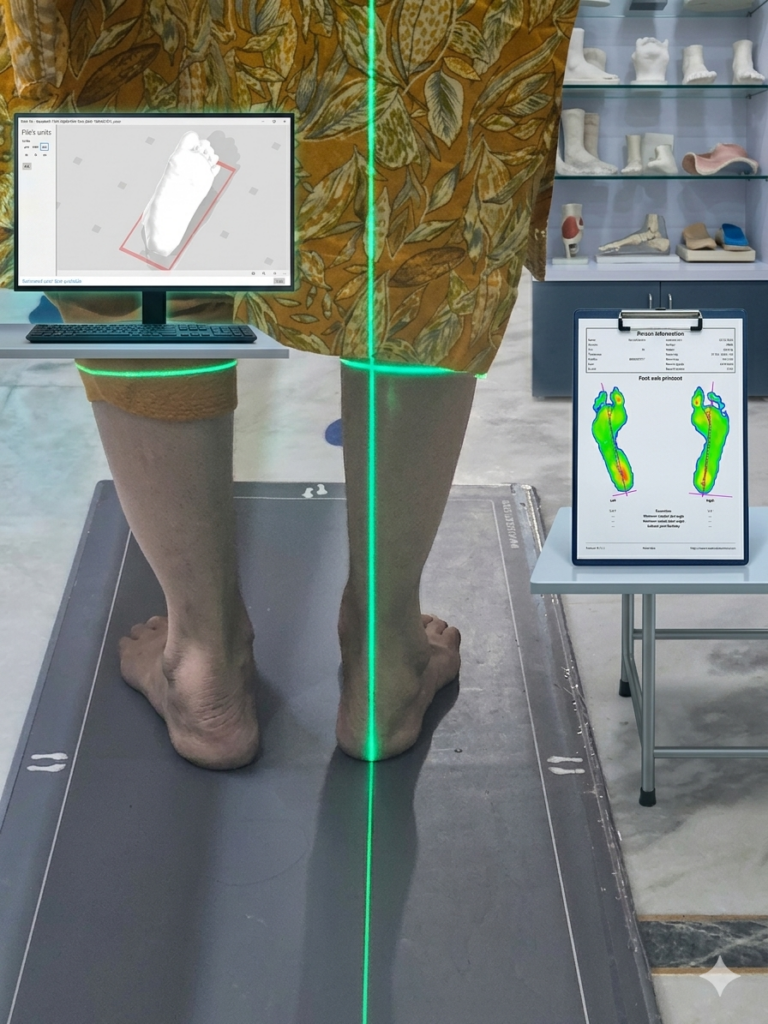
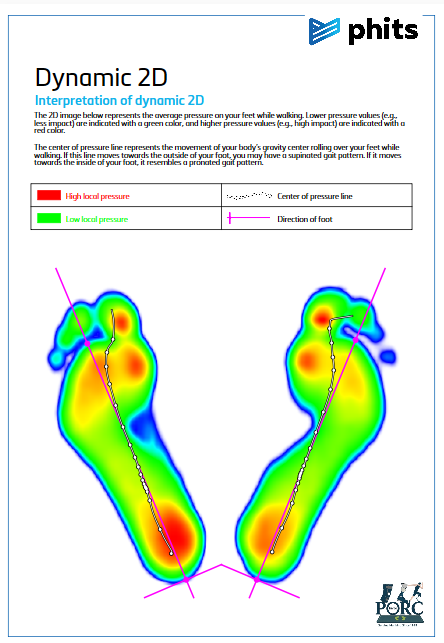
A static footprint shows the foot while it is still. Plantar-fasciitis symptoms, however, are often experienced while standing and walking. The Materialise Footscan plate records pressure and force as the foot contacts the ground and rolls forward.
The software can help the clinician review:
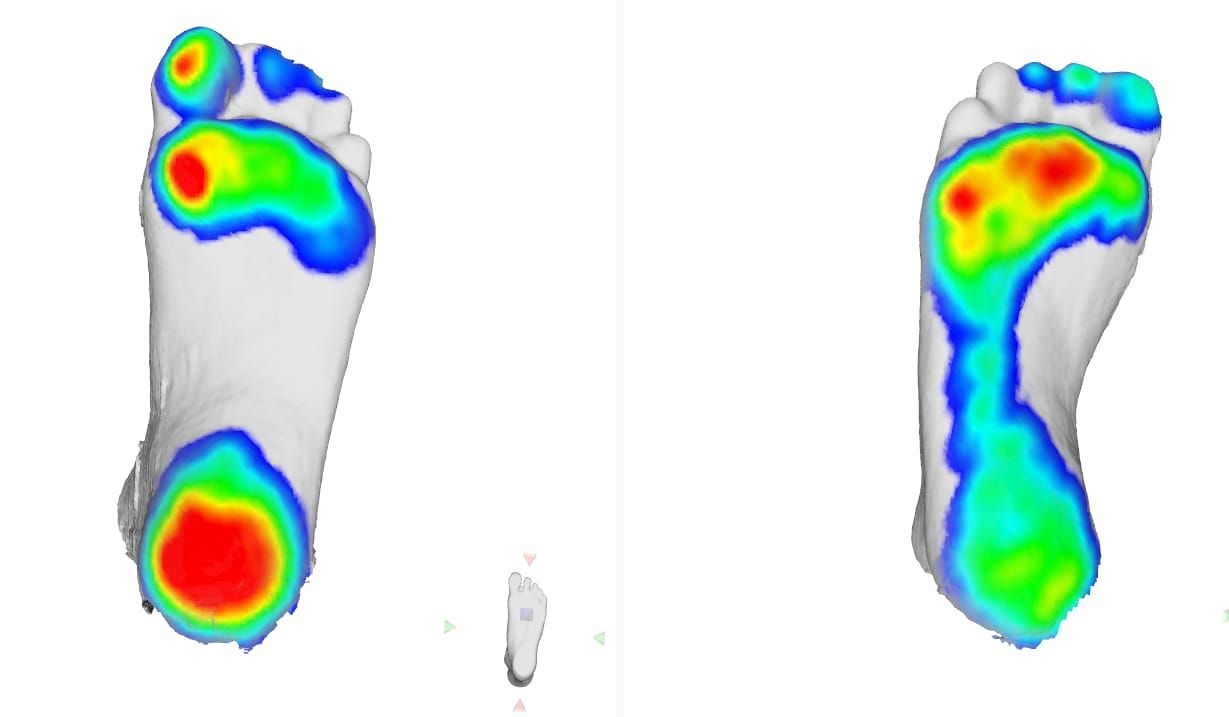
- Peak pressure under the heel, arch and forefoot.
- Force across ten anatomical foot zones.
- The centre-of-pressure path from heel contact to propulsion.
- Medial and lateral loading during heel contact, midstance and forefoot push-off.
- Differences between the left and right foot and between repeated steps.
This information does not replace examination. It adds objective movement data that can be considered alongside pain location, medical history, prescription, foot shape, activity, footwear and patient tolerance.
How P.O.R.C plans PHITS 3D insole modifications
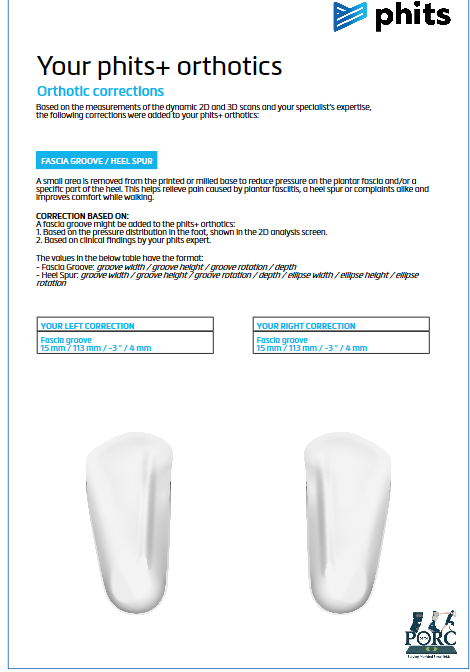
PHITS orthotics are designed from dynamic Footscan measurements. The software provides correction suggestions, but the final design should be clinically reviewed. At P.O.R.C, modifications are selected for the individual rather than applying the same plantar-fasciitis template to every patient.
1. Local heel cushioning
When suitable, local cushioning can be added in the heel area of an EVA top cover. The PHITS design workflow specifically includes this option for plantar fasciitis, heel-spur and heel fat-pad concerns.
2. Heel cup selection
A standard, low or other available heel-cup configuration may be chosen according to heel position, comfort, shoe space and the clinical objective.
3. Heel wedge or raise
Medial-lateral loading from the scan may inform a heel-wedge decision. A heel raise is considered only when clinically appropriate, rather than added routinely for heel pain.
4. Arch and navicular support
Medial arch or navicular support can be adjusted. The amount must suit the patient’s measured foot shape, pressure pattern and tolerance because excessive correction may feel uncomfortable.
5. Local stiffness changes
Different regions of the printed base can be made relatively more or less stiff. These changes are used to influence stability and guide the foot through a more controlled roll-off pattern.
6. Forefoot and metatarsal corrections
If the pressure image shows a separate forefoot need, metatarsal support or a targeted forefoot correction may be considered. These are not automatically required for plantar fasciitis.
7. Top-cover selection
Top-cover thickness, hardness and material are chosen for cushioning, body weight, activity, sensitivity and available shoe space. Daily footwear and sports shoes may need different solutions.
8. Shoe-specific shape
The insole can be planned for comfort, narrow, wide or activity-specific footwear. An accurate orthotic still needs enough room inside a stable and appropriately sized shoe.
The P.O.R.C assessment and fitting process
History and symptom review
We discuss where and when pain occurs, activity changes, work demands, previous treatment, diabetes or neurological history, and any doctor prescription or investigation.
Footwear and clinical examination
Regular shoes, sports shoes and previous insoles are reviewed. Skin condition, foot shape, available shoe space and relevant movement findings are considered.
Repeated walking measurements
The patient walks over the 1 metre Footscan plate for multiple usable steps. The clinician checks scan quality before interpreting pressure, timing, force zones and roll-off.
Personalized PHITS design
Software suggestions are reviewed and modified according to the clinical findings, symptoms, prescription, footwear and patient tolerance.
Fitting and break-in guidance
The completed insoles are checked inside the intended footwear. Patients receive gradual wear and monitoring guidance appropriate to their case.
Follow-up
Comfort, heel pressure, shoe fit and activity response are reviewed. Further clinical or footwear adjustments may be recommended when required.
Insoles are only one part of plantar fasciitis care
Supportive footwear and insoles may help some patients, but plantar fasciitis care commonly also includes activity modification, progressive calf and plantar-fascia stretching, load management and treatment of relevant medical or movement factors. Your doctor or physiotherapist may recommend a different plan depending on the diagnosis and severity.
A custom insole should therefore be viewed as one tool within a broader care plan, not as a guaranteed cure.
When should heel pain be medically reviewed?
Seek medical advice when pain is severe, follows an injury, is getting worse, repeatedly returns, limits normal activity, or does not improve with initial self-care. Earlier review is also important with tingling or loss of sensation, marked swelling or redness, a wound or ulcer, fever, or diabetes.
Footscan and PHITS insoles in Safdarjung Enclave, Delhi
P.O.R.C provides Materialise Footscan assessment and PHITS custom-insole guidance for patients from Safdarjung Enclave, Green Park, Hauz Khas, AIIMS, South Extension, Saket, Vasant Kunj, Noida, Gurugram and Delhi NCR.
- Clinic: 42 Ground Floor, Street No. 1, Krishna Nagar, Safdarjung Enclave, New Delhi – 110029
- Phone: 9810006111
- WhatsApp: 9811706111
Frequently asked questions
Can PHITS insoles cure plantar fasciitis?
No insole can guarantee a cure. A customized insole may help manage loading, cushioning and footwear support when it is appropriate for the patient, but it should form part of a broader clinical care plan.
Does every plantar-fasciitis patient receive the same modifications?
No. Heel cushioning, heel cup, arch support, stiffness, wedge and forefoot choices depend on the scan, symptoms, examination, prescription, footwear and tolerance. Some patients will not need every correction.
Do I need a prescription for a Footscan appointment?
You may book an assessment without a prescription for general pressure and footwear review. A doctor referral is strongly preferred for severe or persistent pain, injury, neurological symptoms, diabetes, wounds, children, surgery cases or reimbursement documentation.
What should I bring to the appointment?
Bring your regular shoes, sports or work shoes if relevant, previous insoles, prescription, reports and a short note about when the pain occurs and which activities make it better or worse.
Why are several walking steps recorded?
Repeated usable steps help the clinician check whether a pressure and roll-off pattern is consistent. Incomplete or unusual foot strikes should not be used blindly for insole design.
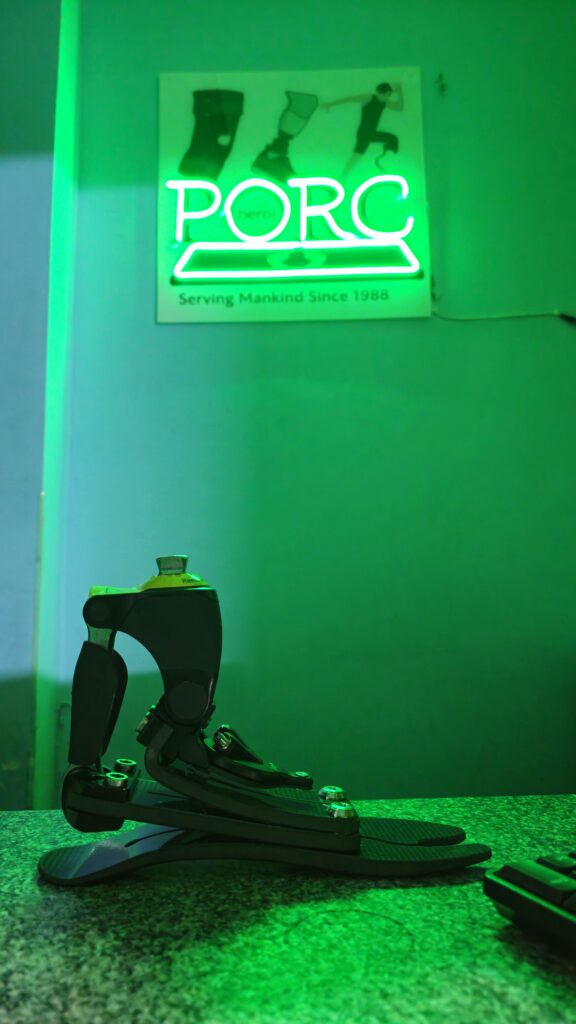
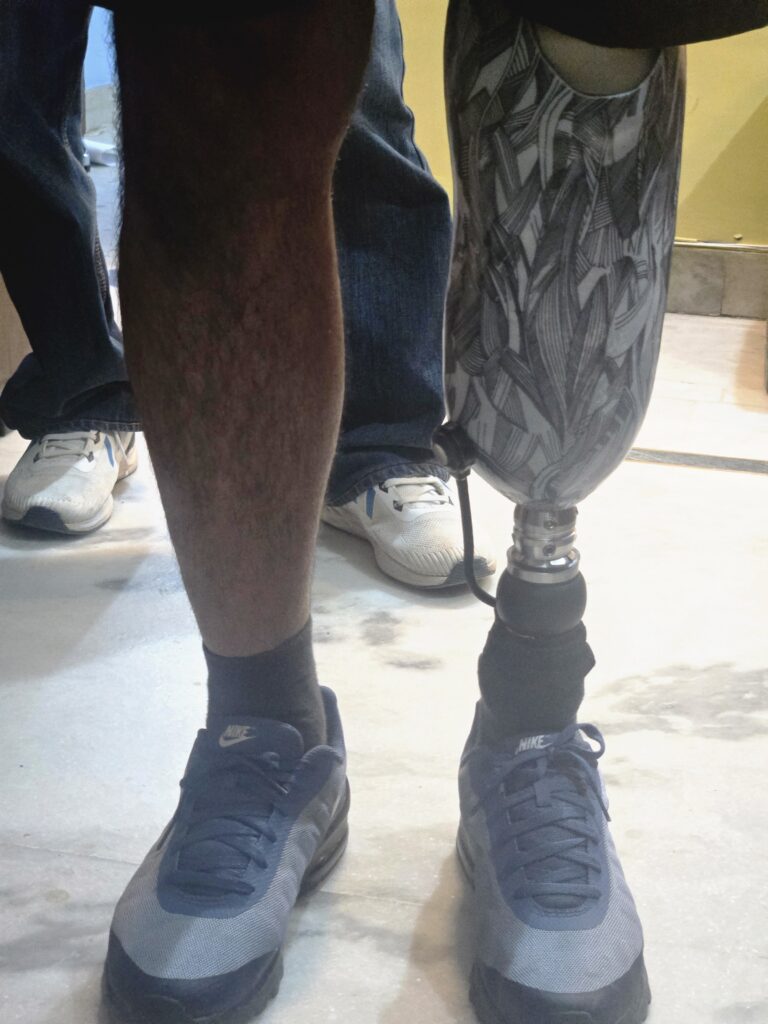
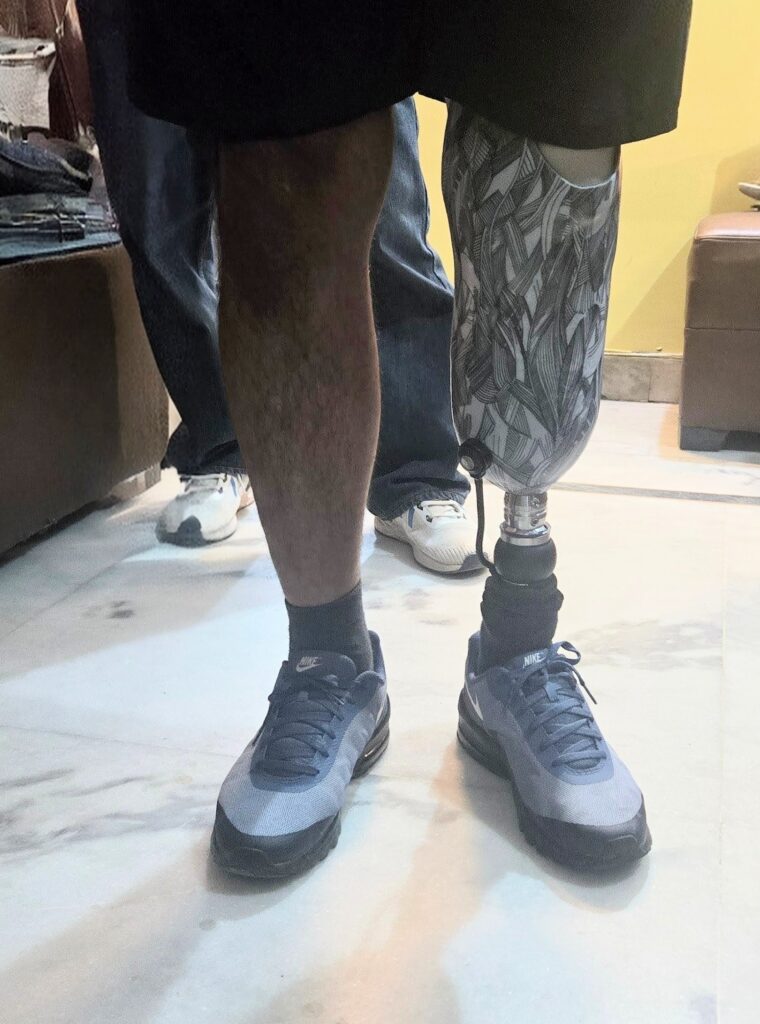
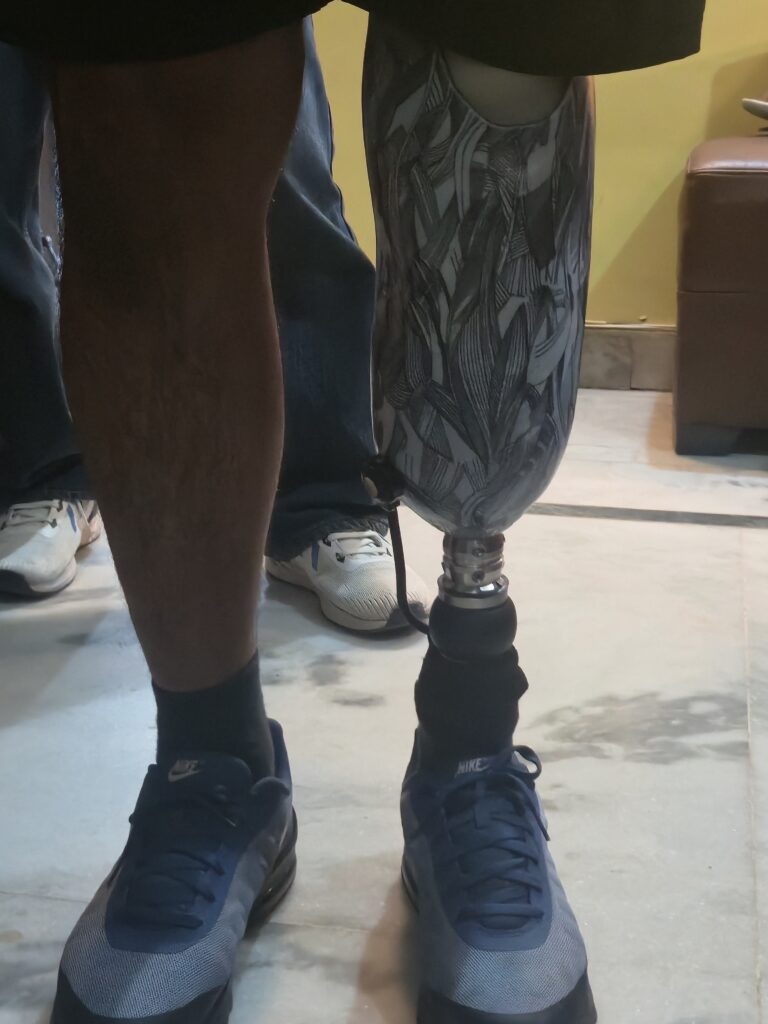
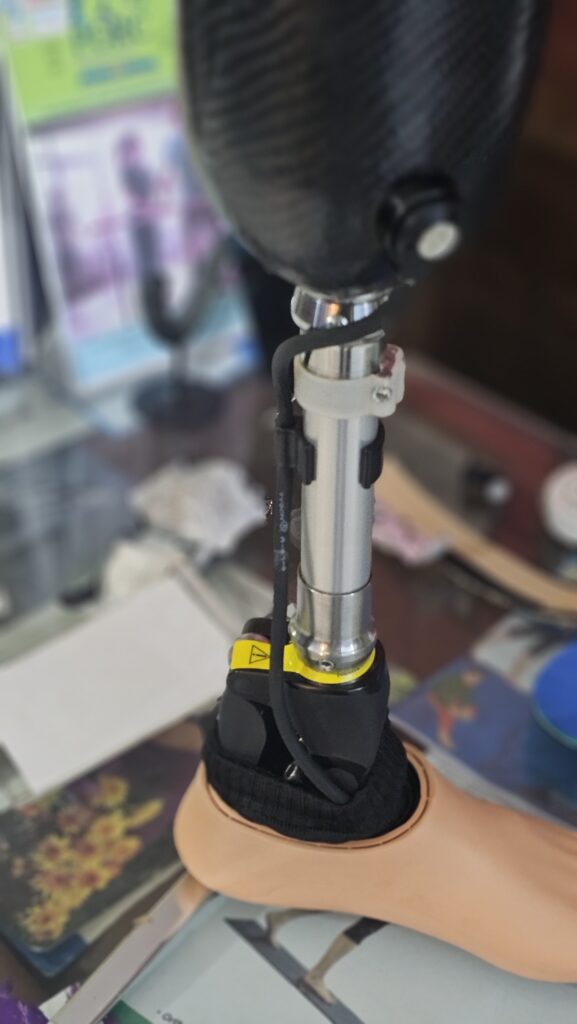
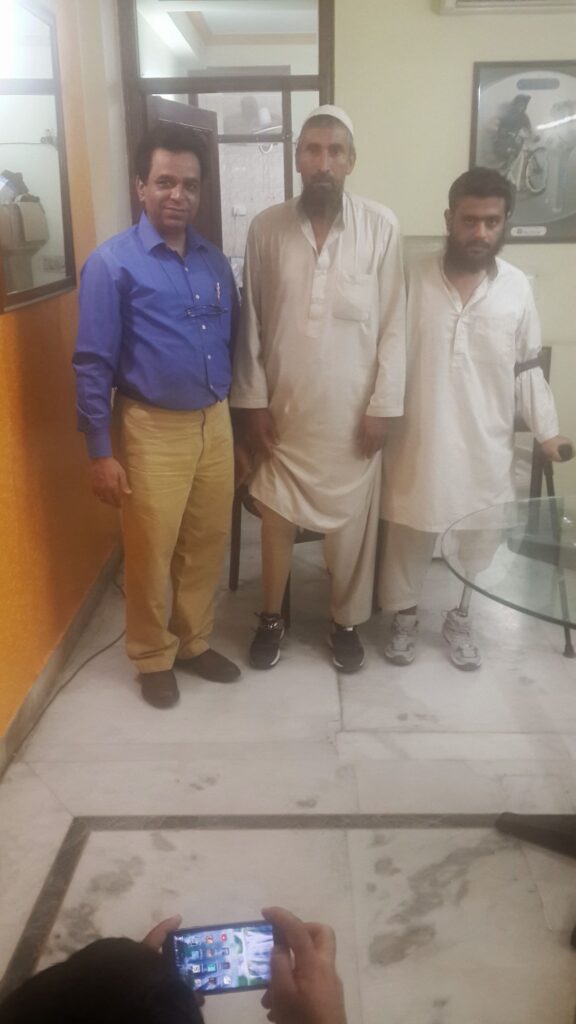
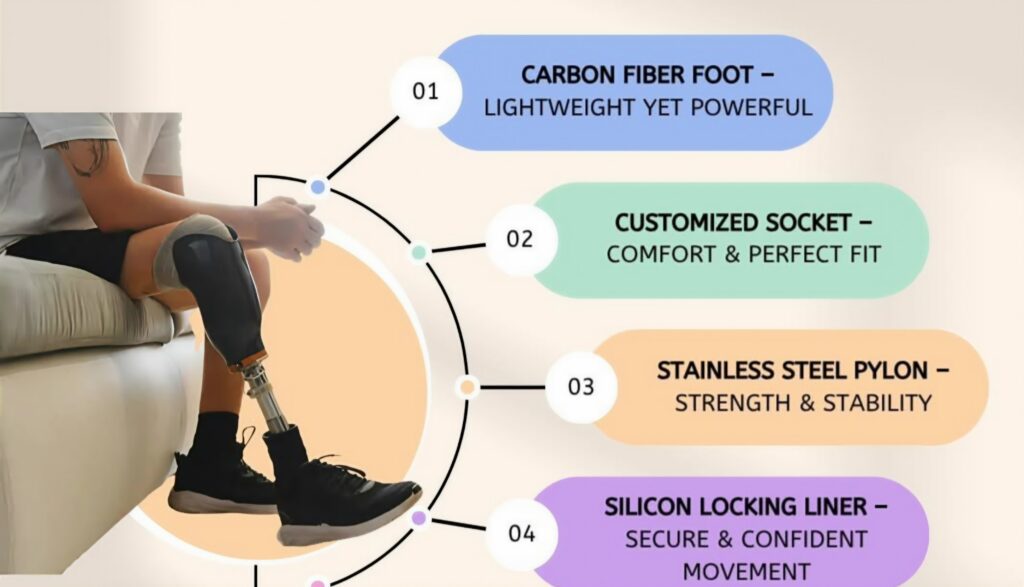
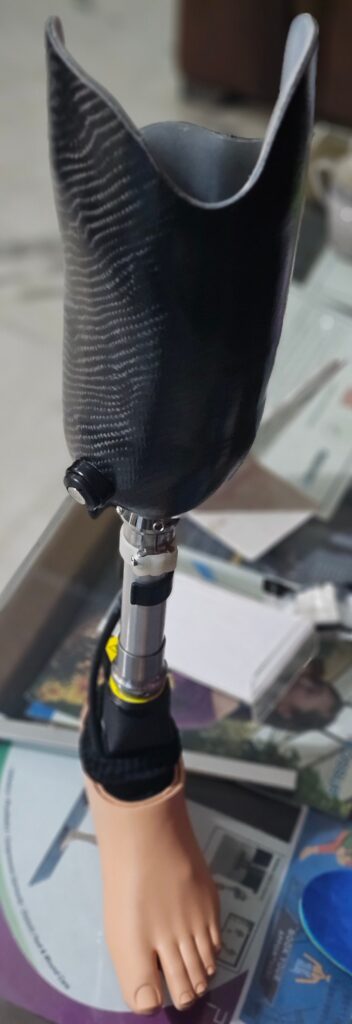
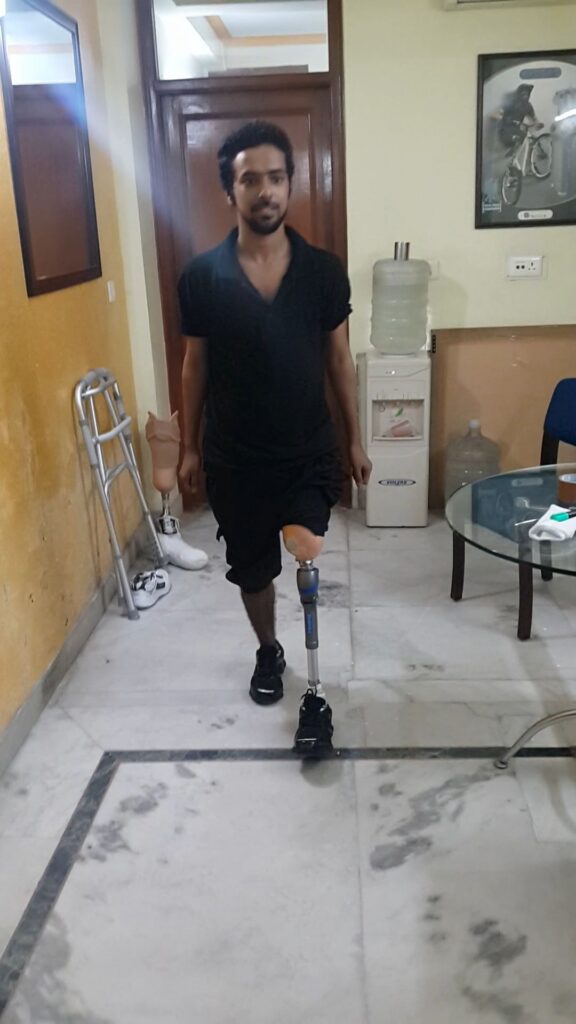
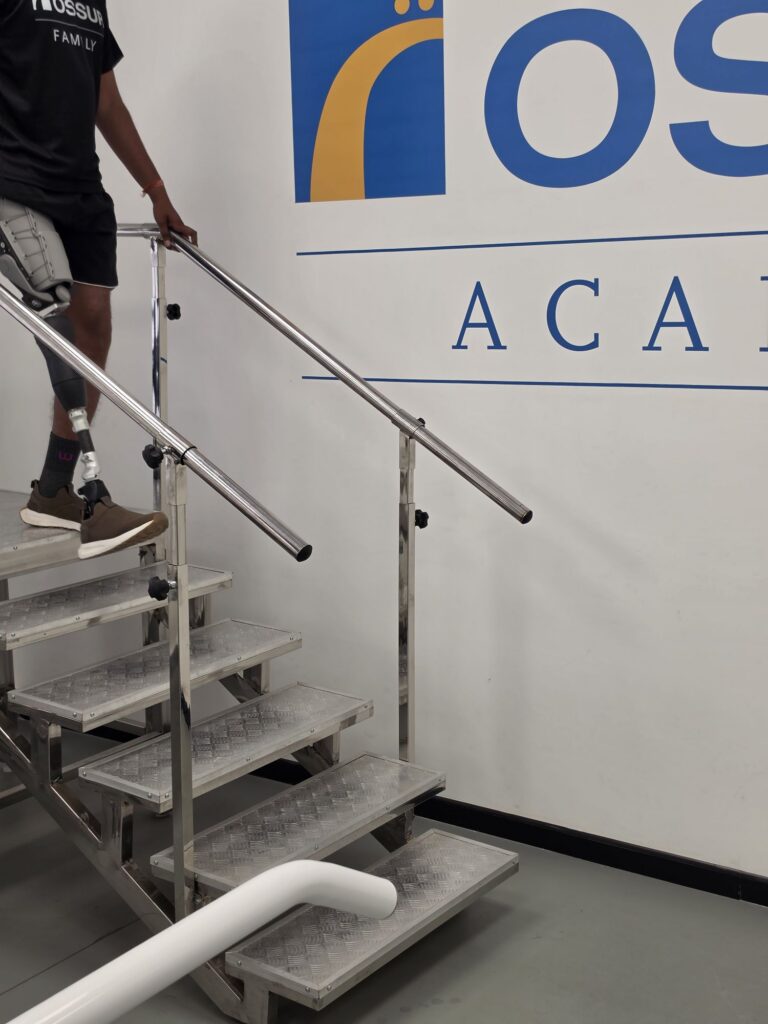
 For a below-knee (transtibial) amputee, the comfort of a prosthesis is decided long before anyone talks about carbon feet or push-off. It is decided by suspension — how securely the residual limb stays connected to the socket through every step. Get it right and the leg disappears into the body. Get it wrong and even the most expensive foot feels like a slipper half a size too big.Both patients came to us with the same underlying issue every transtibial user faces: the limb changes volume through the day, and any air gap that opens between skin and socket becomes pistoning, rubbing and lost confidence. Our answer in both cases was the Össur Unity sleeveless vacuum system — paired with an Iceross Seal-In liner — finished with two different feet chosen for two different lifestyles: the Pro-Flex LP for one, and the high-end Pro-Flex Pivot for the other.The suspension · how it holdsWhat “elevated vacuum” actually doesA suction socket grips the limb with negative pressure. The problem with ordinary suction is that it is passive — set once at don, then slowly lost as the limb shrinks during the day. Elevated (active) vacuum fixes that by continuously pulling air out of the socket while you walk.The pump lives in the footUnity’s mechanical pump sits in the foot module. Each time the foot loads and unloads during gait, that motion draws a little more air out of the socket — no batteries, no motor, no charging.The liner makes the sealAn Iceross Seal-In liner carries silicone sealing membranes that press against the socket wall to form an airtight chamber — so the vacuum holds without an external suspension sleeve.The fit stays put all dayBecause air is removed step after step, limb volume is stabilised and the limb is held firmly in the socket — reducing pistoning, sharpening rotational control and keeping the connection consistent from morning to night.Close-up of the Ossur Unity vacuum pump and titanium pylon on a transtibial prosthesisClose-up of the Unity pump and titanium pylon. The pump is integrated at the foot, so suspension is driven by the user’s own walking.SleevelessNo outer knee sleeve to restrict bending, trap heat, soak up sweat or tear — a common frustration with traditional vacuum setups.Low burdenAdds minimal weight and no extra build height, and doesn’t interfere with how the foot performs.Backed by researchStudies on elevated vacuum report reduced pistoning, more symmetrical steps and improved balance confidence versus passive suspension.The choices · suspension methodsHow below-knee suspension options compareSuspension isn’t one-size-fits-all. Here is the practical ladder we work through with a transtibial patient, from simplest to most sophisticated — each step trading a little convenience for a better, more secure connection.01Cuff & supracondylar (PTB-type)A strap or socket brim that grips above the knee. Simple, cheap and forgiving — but it allows the most movement of the limb inside the socket (pistoning) and the least rotational control. A useful starting or interim option.02Pin / shuttle-lock linerA liner with a distal pin that clicks into a lock at the base of the socket. Secure and very easy to take on and off — but the limb can still pull away at the bottom (“milking”), with all the load concentrated at the distal end.03Suction with an outer sleeveA sealed socket plus a sleeve rolled over the knee creates good suction over the whole limb. Effective — but the sleeve restricts knee bending, traps heat and perspiration, and needs replacing when it punctures.04Seal-In (sleeveless suction)Sealing membranes built into the liner create the airtight seal directly — no outer sleeve. The result is less pistoning, better rotational control and a far simpler routine: roll the liner on, step in, and go.05Elevated vacuum — Össur Unity Used in both casesEverything Seal-In offers, plus an active pump that removes air with every step. The only option that actively maintains the seal as limb volume changes through the day — the most consistent fit, and the closest feeling to the limb being part of the body.The feet · energy & protectionTwo feet, two walkersÖssur’s Pro-Flex family moves beyond older two-blade “energy-storing” carbon feet with a three-blade design that returns more energy and bends through a wider arc — closer to how a real ankle behaves. We chose two members of that family.Patient A · everydayPro-Flex LPLow-profile foot for longer residual limbsFull standard-height dynamics packed into a low build height — ideal when the limb is long and space below the socket is tight.“Reverse-tapered” blade geometry allows greater dorsiflexion for a smoother roll-over.Waterproof construction and an anatomical foot cover with a grippy sole for everyday confidence.Össur specifically recommends pairing it with Unity — no added build height, no interference with foot dynamics.Patient B · high-endPro-Flex PivotPivot mechanism for the most natural gaitA dedicated pivot point near the ankle lets the foot move through a large, natural arc and deliver a strong, spring-like push-off — power without a motor.Designed to protect the sound side: a more natural roll-over reduces the load driven through the intact leg over a lifetime of steps.Reduced walking effort and a smoother, more symmetrical stride for active day-to-day life.27°ankle range of motion+95%peak ankle power*~11%less load on sound side**Össur figures vs a conventional energy-storing & return foot.Fitting 01 · the buildThe everyday-mobility limbFinished transtibial prosthesis at PORC: carbon-fibre socket, Unity vacuum, pylon and footConfigurationUnity vacuum · Pro-Flex LP · Iceross Seal-InThis patient wanted one thing above all: a limb that stays comfortable from morning until night, with low fuss. A longer residual limb made the low-profile Pro-Flex LP the natural foot — full-height dynamics in the limited space available, while Unity holds the volume steady through the day.LevelTranstibial (below knee)SocketCarbon-fibre, total-surface-bearingLinerIceross Seal-In (sealing membranes)SuspensionÖssur Unity sleeveless elevated vacuumFootÖssur Pro-Flex LPGoalAll-day comfort & consistent fitFitting 02 · the buildThe high-performance limbPatient weight-bearing on a high-end transtibial prosthesis fitted at PORCConfigurationUnity vacuum · Pro-Flex Pivot · Seal-In X5A more active user who is on the move all day, wants the limb to feel natural, and needs the sound side protected over the long run. Here we specified the high-end Pro-Flex Pivot for its large ankle arc and powered push-off, with the Iceross Seal-In X5 liner — five integrated seals for the most secure, airtight grip — driven by the same Unity vacuum.LevelTranstibial (below knee)SocketCarbon-fibre, total-surface-bearingLinerIceross Seal-In X5 (five seals)SuspensionÖssur Unity sleeveless elevated vacuumFootÖssur Pro-Flex PivotGoalNatural gait & sound-side protectionTwo patients, one suspension philosophy: secure the limb with active vacuum first, then build the right foot on top of a fit you can trust.In short · why we reach for UnityWhy we build below-knee limbs on UnityWhen suspension is passive, the patient spends the day chasing their fit — adding socks, re-donning, working around a leg that loosens. Unity moves the limb from passively held to actively held. The pump does the work the patient used to do by hand, the Seal-In liner removes the hot, restrictive sleeve, and the connection stays honest from the first step to the last.On that foundation, the foot becomes a genuine lifestyle choice rather than a compromise. The Pro-Flex LP gives a long-limbed everyday walker full dynamics in a slim package; the Pro-Flex Pivot gives an active walker a near-natural ankle and real protection for the leg they still depend on. Same secure base, two very different — and very deliberate — outcomes.Thinking about a below-knee prosthesis?Every limb starts with an assessment, not a catalogue. Visit our Safdarjung Enclave branch and we’ll work out the right suspension and foot for how you move.Book an assessmentPORC · Prosthetic & Orthotic Rehabilitation ClinicKrishna Nagar, Safdarjung Enclave, New Delhi · Delhi NCRwww.porc.co.in · Serving Mankind Since 1988PORCMovement is life. We keep you moving.Educational case note. Product names — Össur, Unity, Pro-Flex, Iceross Seal-In — are trademarks of Össur. Component selection is individualised after clinical assessment; outcomes vary from person to person. Photographs taken at PORC, Safdarjung Enclave.