How do you know whether a custom orthotic is useful? A better-looking screen image is not enough. The meaningful question is whether the agreed treatment goals are improving safely in the activities that matter to you.
Choose a goal you can describe
A goal might be walking to the local market with less discomfort, tolerating a normal commute or reducing a recurring rubbing problem. Record a starting point before changing several things at once. Note the activity, footwear and symptoms rather than chasing a perfect number. Pain varies with workload, sleep, training and other treatment. A single good day or a single pressure image cannot tell the whole story about whether a device is appropriate.
Use observations rather than assumptions
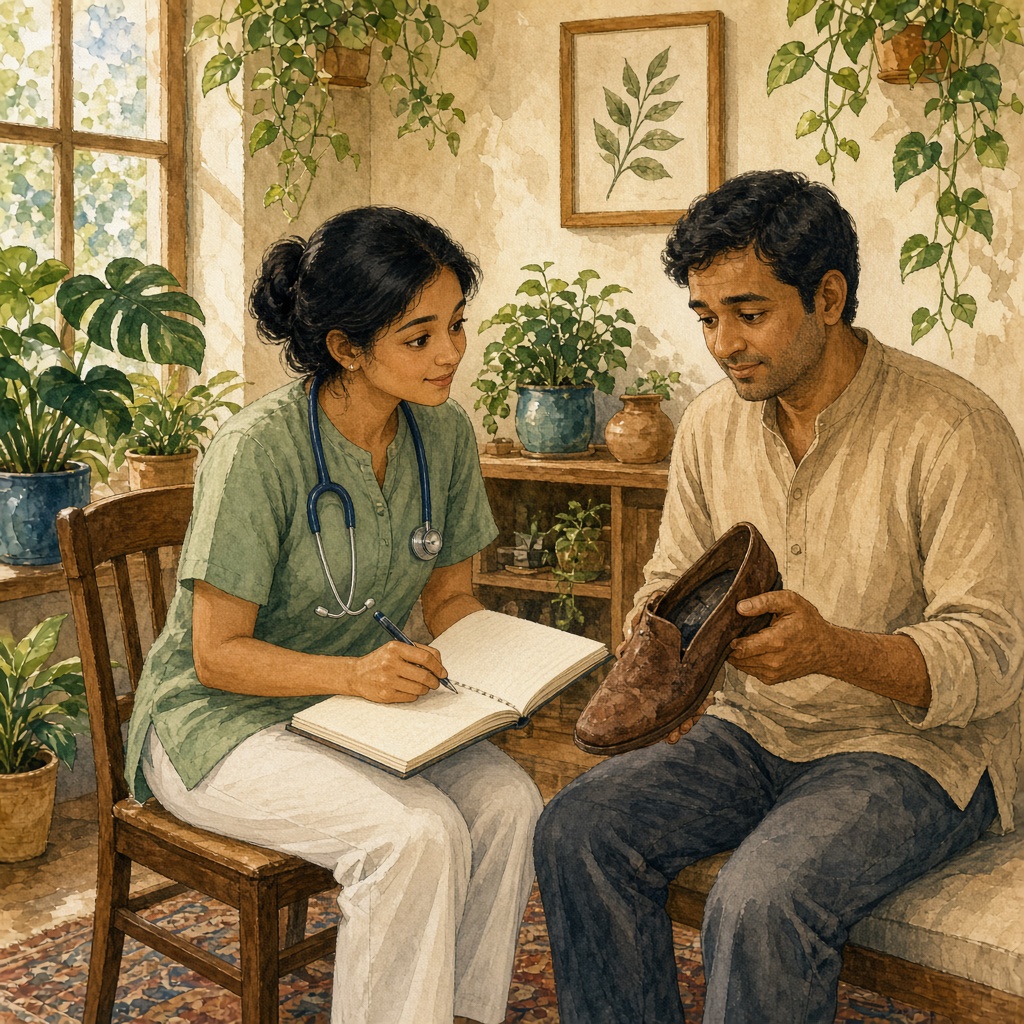
A short record can include wear time, the shoe pair, where discomfort occurred and whether there were skin changes. If you also began exercises or changed your work routine, note those changes. Improvement may reflect the whole care plan rather than the insole alone. Equally, lack of progress does not prove that a stronger arch or a more rigid device is needed. It may mean the diagnosis, footwear, dosage or treatment strategy needs review.
Make the review specific
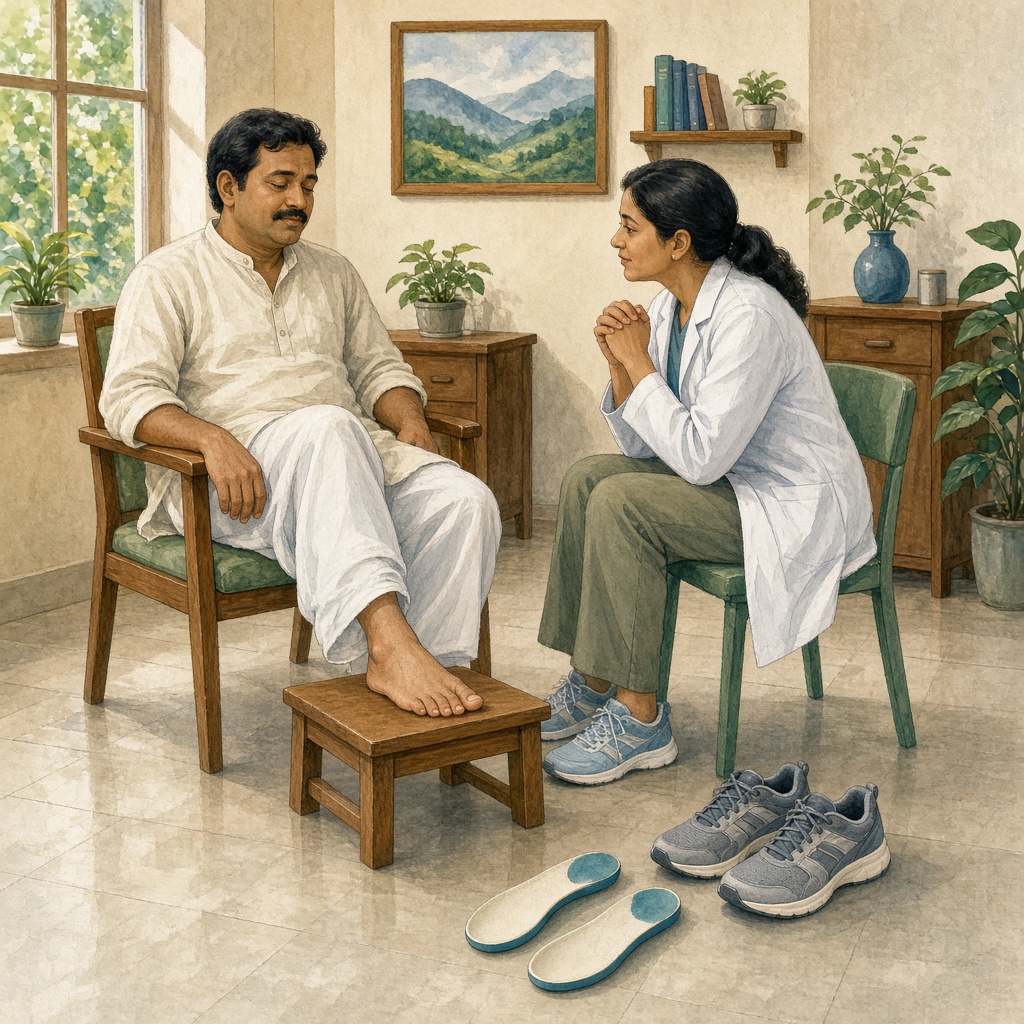
Bring the orthotics and the shoes you actually use. Describe what improved, what did not and any new problem. A clinician may examine you again, inspect the device and decide whether further assessment or a change is appropriate. Repeat pressure testing can be useful in selected circumstances, but it is not automatically necessary at every appointment. Review is about safe function and a sensible next step, not selling another pair because a graphic changed colour.
Where Footscan and PHITS fit at P.O.R.C
P.O.R.C — Prosthetic & Orthotic Rehabilitation Clinic — has been serving since 1988. For people exploring custom insoles in Delhi, the clinic uses Footscan and PHITS 3D-printed insoles as part of an individual assessment pathway. A scan is not a diagnosis. It can add loading information to the clinical picture, but it does not by itself establish that you need an orthotic or predict the result.
If you are considering 3D printed orthotics in South Delhi or elsewhere in Delhi NCR, start with the problem you want help with rather than requesting a particular contour. Your symptoms, medical history, examination, footwear and activities help determine the next step. The team may discuss a prescribed device, simpler support, footwear changes, rehabilitation or a medical referral. Outcomes vary, and no insole should be presented as a guaranteed cure.
Read about Footscan and custom insoles before your visit. For local access, see Apollo Sarita Vihar. P.O.R.C also has branch information for Safdarjung Enclave, Apollo Sarita Vihar and BLK-Max. Confirm the appointment location and service arrangements with the clinic; a branch page is not a promise of walk-in availability.
Short FAQ
Is a more even pressure picture proof of success?
No. Symptoms, skin safety, activity and clinical findings must also be considered.
Can a Footscan explain every cause of foot pain?
No. Pressure information is one part of an assessment. Some symptoms need medical examination or other investigations before an orthotic is considered.
What should I bring to a review?
Bring the shoes and socks you actually use, your current inserts if any, relevant reports and a short account of your symptoms. Ask about the intended goal, alternatives, care instructions and follow-up before committing to a device.
This article is general education, not a diagnosis or personalised treatment advice. Seek prompt medical help for severe or sudden symptoms, a wound, or a hot swollen foot, especially with diabetes or reduced sensation.