Pain under the heel during the first few steps in the morning is a common plantar fasciitis pattern. At P.O.R.C in Delhi, we combine clinical assessment, footwear review and Materialise Footscan pressure data to decide whether a personalized PHITS 3D-printed insole may form part of the care plan.
What is plantar fasciitis?
The plantar fascia is a strong band of tissue that runs from the heel toward the front of the foot and helps support the arch. Plantar fasciitis describes irritation around this tissue, commonly near its attachment at the heel.
Typical symptoms can include:
- Pain beneath the heel or through the arch.
- Pain that is worse with the first steps after sleep or rest.
- Symptoms that ease after moving for a while but return after prolonged standing, walking or running.
- Tenderness when the sole of the foot is stretched.
Foot structure, sudden changes in activity, prolonged standing, footwear, calf tightness and the way load moves through the foot may all influence symptoms. A heel spur seen on an X-ray is not automatically the source of pain.
Why dynamic Footscan data matters
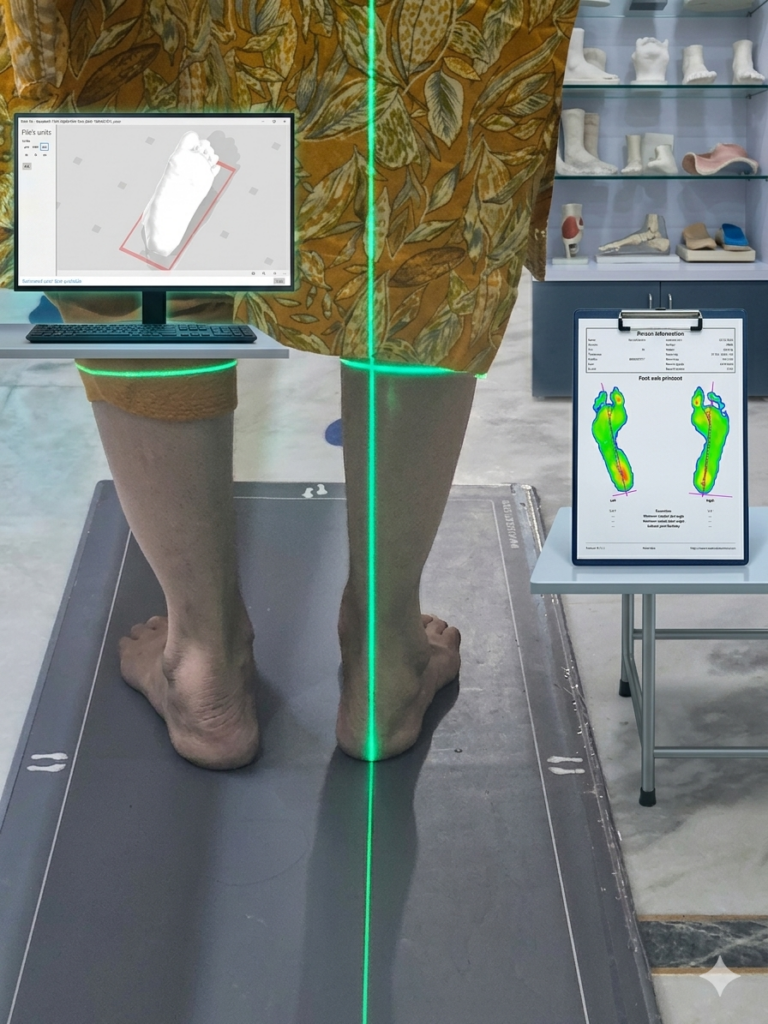
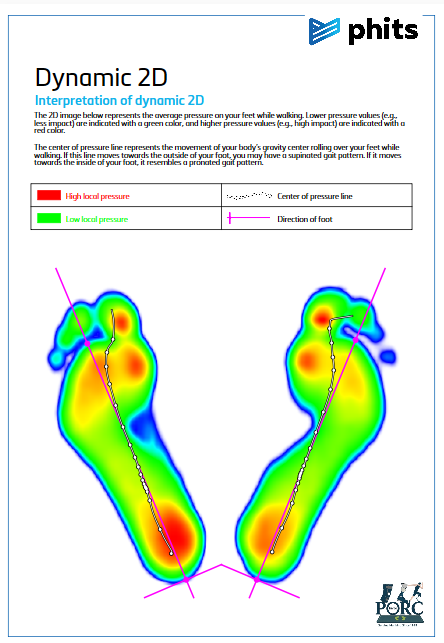
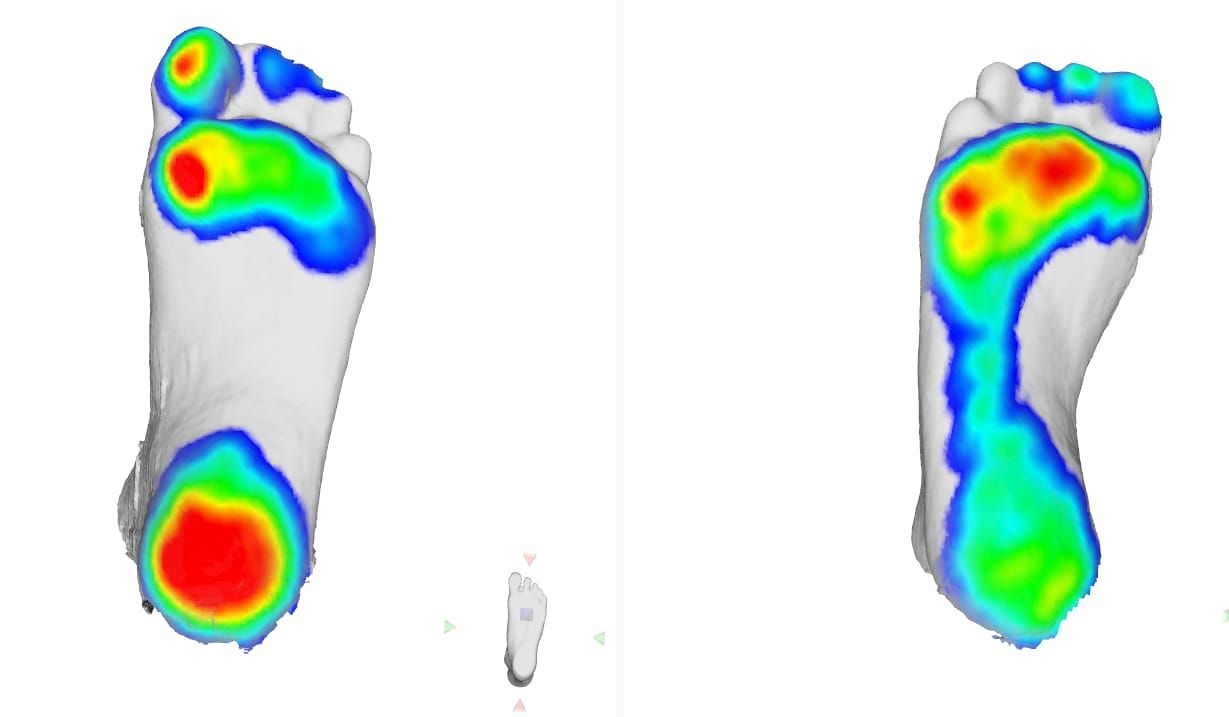
A static footprint shows the foot while it is still. Plantar-fasciitis symptoms, however, are often experienced while standing and walking. The Materialise Footscan plate records pressure and force as the foot contacts the ground and rolls forward.
The software can help the clinician review:
- Peak pressure under the heel, arch and forefoot.
- Force across ten anatomical foot zones.
- The centre-of-pressure path from heel contact to propulsion.
- Medial and lateral loading during heel contact, midstance and forefoot push-off.
- Differences between the left and right foot and between repeated steps.
This information does not replace examination. It adds objective movement data that can be considered alongside pain location, medical history, prescription, foot shape, activity, footwear and patient tolerance.
How P.O.R.C plans PHITS 3D insole modifications
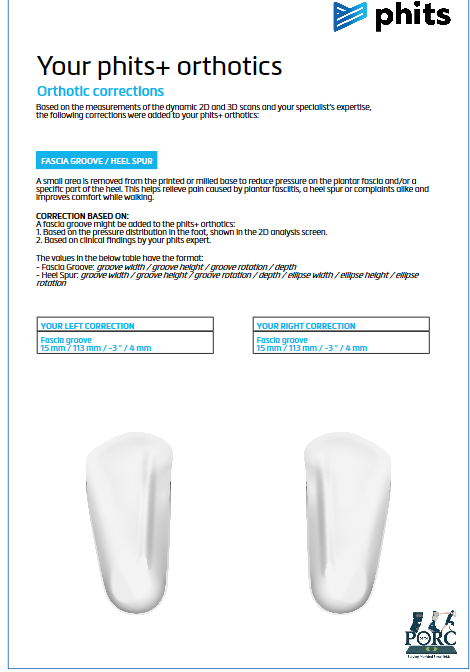
PHITS orthotics are designed from dynamic Footscan measurements. The software provides correction suggestions, but the final design should be clinically reviewed. At P.O.R.C, modifications are selected for the individual rather than applying the same plantar-fasciitis template to every patient.
1. Local heel cushioning
When suitable, local cushioning can be added in the heel area of an EVA top cover. The PHITS design workflow specifically includes this option for plantar fasciitis, heel-spur and heel fat-pad concerns.
2. Heel cup selection
A standard, low or other available heel-cup configuration may be chosen according to heel position, comfort, shoe space and the clinical objective.
3. Heel wedge or raise
Medial-lateral loading from the scan may inform a heel-wedge decision. A heel raise is considered only when clinically appropriate, rather than added routinely for heel pain.
4. Arch and navicular support
Medial arch or navicular support can be adjusted. The amount must suit the patient’s measured foot shape, pressure pattern and tolerance because excessive correction may feel uncomfortable.
5. Local stiffness changes
Different regions of the printed base can be made relatively more or less stiff. These changes are used to influence stability and guide the foot through a more controlled roll-off pattern.
6. Forefoot and metatarsal corrections
If the pressure image shows a separate forefoot need, metatarsal support or a targeted forefoot correction may be considered. These are not automatically required for plantar fasciitis.
7. Top-cover selection
Top-cover thickness, hardness and material are chosen for cushioning, body weight, activity, sensitivity and available shoe space. Daily footwear and sports shoes may need different solutions.
8. Shoe-specific shape
The insole can be planned for comfort, narrow, wide or activity-specific footwear. An accurate orthotic still needs enough room inside a stable and appropriately sized shoe.
The P.O.R.C assessment and fitting process
History and symptom review
We discuss where and when pain occurs, activity changes, work demands, previous treatment, diabetes or neurological history, and any doctor prescription or investigation.
Footwear and clinical examination
Regular shoes, sports shoes and previous insoles are reviewed. Skin condition, foot shape, available shoe space and relevant movement findings are considered.
Repeated walking measurements
The patient walks over the 1 metre Footscan plate for multiple usable steps. The clinician checks scan quality before interpreting pressure, timing, force zones and roll-off.
Personalized PHITS design
Software suggestions are reviewed and modified according to the clinical findings, symptoms, prescription, footwear and patient tolerance.
Fitting and break-in guidance
The completed insoles are checked inside the intended footwear. Patients receive gradual wear and monitoring guidance appropriate to their case.
Follow-up
Comfort, heel pressure, shoe fit and activity response are reviewed. Further clinical or footwear adjustments may be recommended when required.
Insoles are only one part of plantar fasciitis care
Supportive footwear and insoles may help some patients, but plantar fasciitis care commonly also includes activity modification, progressive calf and plantar-fascia stretching, load management and treatment of relevant medical or movement factors. Your doctor or physiotherapist may recommend a different plan depending on the diagnosis and severity.
A custom insole should therefore be viewed as one tool within a broader care plan, not as a guaranteed cure.
When should heel pain be medically reviewed?
Seek medical advice when pain is severe, follows an injury, is getting worse, repeatedly returns, limits normal activity, or does not improve with initial self-care. Earlier review is also important with tingling or loss of sensation, marked swelling or redness, a wound or ulcer, fever, or diabetes.
Footscan and PHITS insoles in Safdarjung Enclave, Delhi
P.O.R.C provides Materialise Footscan assessment and PHITS custom-insole guidance for patients from Safdarjung Enclave, Green Park, Hauz Khas, AIIMS, South Extension, Saket, Vasant Kunj, Noida, Gurugram and Delhi NCR.
- Clinic: 42 Ground Floor, Street No. 1, Krishna Nagar, Safdarjung Enclave, New Delhi – 110029
- Phone: 9810006111
- WhatsApp: 9811706111
Frequently asked questions
Can PHITS insoles cure plantar fasciitis?
No insole can guarantee a cure. A customized insole may help manage loading, cushioning and footwear support when it is appropriate for the patient, but it should form part of a broader clinical care plan.
Does every plantar-fasciitis patient receive the same modifications?
No. Heel cushioning, heel cup, arch support, stiffness, wedge and forefoot choices depend on the scan, symptoms, examination, prescription, footwear and tolerance. Some patients will not need every correction.
Do I need a prescription for a Footscan appointment?
You may book an assessment without a prescription for general pressure and footwear review. A doctor referral is strongly preferred for severe or persistent pain, injury, neurological symptoms, diabetes, wounds, children, surgery cases or reimbursement documentation.
What should I bring to the appointment?
Bring your regular shoes, sports or work shoes if relevant, previous insoles, prescription, reports and a short note about when the pain occurs and which activities make it better or worse.
Why are several walking steps recorded?
Repeated usable steps help the clinician check whether a pressure and roll-off pattern is consistent. Incomplete or unusual foot strikes should not be used blindly for insole design.